Posts

Showing posts with the label AC MOTORS

What's new in ABB FLP Motors?

Image
  For any enquiries on AC Motors, please contact 7995080630 or  sirusindia@gmail.com.

Flame-proof Motors – Why are they important?

Image
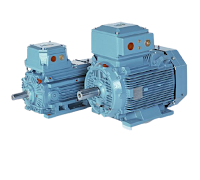
Fame-proof  / Explosion-proof motors are designed to keep explosions contained within a sealed environment and cool the escaping gases so that they don't ignite surrounding materials in the atmosphere. Flameproof motors are designed to withstand the pressure caused by an internal explosion without incurring any damage and are also able to prevent flame propagation outside. They are required to ensure to provide insurance if the motors are not used where it is required. safety and to avoid fire hazards. Insurance companies may refuse  The main difference between a flame-proof motor and a normal is the construction of ‘Frame of the motor’ and ‘Terminal box’. The frame is more robust with larger spigots and end covers on the bearing housing. This more robust frame is needed to contain within if any gas explosion (not electrical explosion) occurs inside the frame. The larger spigots on the frame (called flame path) also act as a cooler for the flames so as to cool down ...

Managing the effects of VFDs on Motors.

Image
Normal motors are designed to operate on a fundamental frequency of 50 Hz. The high switching frequency of the IGBT transistors employed in modern variable frequency drives (VFDs) may degrade the motor insulation system, cause rise in temperature and hence reduce the motor lifetime . To safeguard the motor from the adverse effects of VFDs, it would be beneficial to consider the following. Effect of VFD Options available Steep voltage pulses that can stress stator winding insulation, might lead to sparking Dual-coated enamel wire  for windings Vacuum Pressure Impregnation (VPI)  for windings The common-mode voltage and its associated dv/dt generate bearing currents, which may lead to the breakdown of bearings Insulated bearing on the NDE side for above 280 frames (> 75 KW) and Hybrid bearing from 160 to 280 frame (15 – 75 KW) Higher harmonic currents (noise caused by the high switchi...

Costs Savings From Energy-Efficient Motors.

Image
More than  60% of the electric motors operating in India are in the IE1 category. With the developments in efficiency standards from IE1 to IE4, it is worthwhile to look at the cost-benefit analysis of all the existing motors operating in the plant. In Motors, we should consider the total lifetime cost rather than just the initial cost, As shown in the picture, the operating cost is several times higher than the purchase cost of the motor assuming an average life of 20 years under normal maintenance. This is similar to an air conditioner in the house, where the running cost is very high compared to the purchase cost. Consider the following example of 15KW/20HP, 3-Phase, 415 V, Cage Motor at full load to understand the cost and efficiency effect. For this example, let's calculate the annual savings in replacing an IE1 motor operating 3 shifts a day at full load with an IE4 motor. The above was assuming the replacement of a new IE1 motor with a new IE4 motor, resulting in an investm...

International Efficiency(IE) Standards For AC Motors

Image
Over 40% of all electrical energy consumed in India is used by electric motors. Thus improving the efficiency of electric motors and the driven equipment can save energy, reduce operating costs and improve our nation's productivity to be competitive in the world market. WHEN SHOULD YOU CONSIDER BUYING AN ENERGY-EFFICIENT MOTOR Any new installation. Expansions/ Modifications to the existing setup. The purchase did as a combined system(e.g. along with Compressors, HVAC, Pumps, or any others. Replacing old continuous-operation motors which have undergone multiple rewinding. Replacing oversized and under-loaded motors. Replacing old slip-ring motors/DC motors with AC cage motors. International Electro-technical Commission (IEC) standards of IE1, IE2, IE3 & IE4 came into existence in India a few years ago replacing the earlier adopted European Efficiency Classification standards of EFF1, EFF2 & EFF3. There are two key differences between the standards. On EFF the stray loss is a...